Overzicht
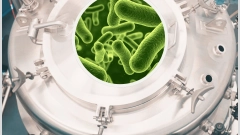
Biomanufacturing is increasingly used to produce everyday products – from enzymes in detergents to ingredients in food and bio-based materials. But how do microorganisms become reliable production systems at industrial scale?
In this course, you will gain an overview of how microbial cell factories are developed and used in industrial biotechnology. You will explore how microorganisms grow, how their performance can be improved and optimized, and how processes are scaled from laboratory conditions to real-world production.
You will be introduced to the key stages of a biomanufacturing process, including fermentation and downstream processing, and learn how these steps are connected. The course also highlights why processes that work well in the laboratory often behave differently at larger scale, and how biological and engineering considerations must be balanced.
The course combines conceptual explanations, a simple simulation exercise, and perspectives from industry professionals. Together, these elements provide a general understanding of how biomanufacturing works in practice without requiring an advanced technical background.
The course also offers a glimpse into emerging developments such as AI-guided protein design, novel biotechnological products, and the role of biotechnology in the circular economy and sustainability. By the end of the course, you will have a clearer understanding of how biological systems are translated into industrial processes and where biotechnology fits into modern production and sustainability discussions.
Lesprogramma
- Biomanufacturing: From Cells to Products
In this module, you will be introduced to industrial biomanufacturing and how biological systems can be used to manufacture valuable products. You will gain an overview of the biomanufacturing process, from cell factories to final products, and the topics covered throughout the course.
- Cell Factories for Bioproduction
In this module, we focus on cell factories – the microorganisms that form the foundation of industrial biomanufacturing. You will learn about different production hosts, including bacteria and yeast, and explore how their characteristics influence their suitability for specific applications. The module also introduces the principles of microbial growth and cultivation, providing insight into how production organisms are selected and evaluated for use in biomanufacturing processes. Through examples, simulation exercises, and an industry perspective, you will gain a practical understanding of the factors that influence the choice of a cell factory.
- Cell Factory Optimization
In this module, we focus on optimizing cell factories to improve the production of biotechnological products. You will explore how microorganisms can be engineered to enhance performance and learn about key approaches used in metabolic engineering and strain development. Through an industry perspective, the module highlights how improving a production strain is often an iterative process and an important part of modern biomanufacturing.
- The Bioprocess and Scale-Up
In this module, the focus shifts from the cell factory to the biomanufacturing process itself. You will learn about the main stages of a bioprocess, from fermentation to product recovery and purification, and explore how these steps work together to produce biotechnological products. The module also introduces the challenges of scaling a process from the laboratory to industrial production and highlights how biological and engineering considerations must be balanced to achieve reliable and efficient manufacturing.
- Biotechnological Products
In this module, we explore the wide range of products that can be manufactured using biotechnology, from food ingredients and industrial enzymes to medicines and living microbial products. Particular attention is given to proteins, one of the most important and versatile classes of biotechnological products. Through real-world examples, you will learn how proteins are used in healthcare and biotechnology and how advances in protein engineering and artificial intelligence are expanding the possibilities for future products. The module highlights the diversity of biotechnological products and the relationship between product applications and manufacturing approaches.
- Biotechnology, Circular Economy, and Sustainability
In this module, we explore how biotechnology and biomanufacturing can contribute to more sustainable and resource-efficient production systems. You will be introduced to key concepts such as sustainability, the circular economy, and the bioeconomy, and learn how environmental and economic impacts can be assessed. Through examples and case studies, the module highlights both the opportunities and challenges associated with developing more sustainable biomanufacturing processes and products.
Gegeven door
Friederike Buchholz
Vakgebieden
Engineering