What You Need to Know Before
You Start
Starts 20 July 2026 14:32
Ends 20 July 2026
Capstone Assignment
University of Glasgow
6 Courses
The University of Glasgow is a globally recognized, research-focused university with a history that extends over 570 years. It boasts an exceptional reputation for excellence in teaching and research, offering students a distinctive learning experience.
3 hours
Optional upgrade avallable
Intermediate
Progress at your own speed
Paid Course
Optional upgrade avallable
Overview
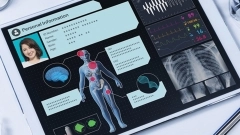
This capstone course gives you the opportunity to bring everything you have learned in the Informed Clinical Decision Making using Deep Learning Specialization together in one hands-on, practical project. You will work with real-world critical care data from the MIMIC-III database and tackle a clinically meaningful prediction task from start to finish.
You will choose one of three advanced projects focused on explainable artificial intelligence in healthcare:
permutation feature importance, LIME, or Grad-CAM. Each project guides you through querying and preparing electronic health record data, building predictive models such as logistic regression or LSTM networks, and interpreting model predictions using state-of-the-art explainability techniques.
The focus is not only on model performance, but on understanding and communicating why a model makes its predictions. By completing this capstone, you will gain practical experience translating deep learning models into insights that support trustworthy and transparent Clinical Decision Support Systems.
This course is ideal for learners who want to demonstrate applied skills, build confidence working with clinical data, and showcase their ability to combine technical expertise with clinical reasoning.
Syllabus
- Permutation feature importance on the MIMIC critical care database
- LIME on the MIMIC critical care database
- Grad-CAM on the MIMIC critical care database
Taught by
Fani Deligianni
Subjects
Computer Science