Wat je moet weten voordat je
begint
Start 5 July 2026 18:34
Einde 5 July 2026
00
Dagen
00
Uren
00
Minuten
00
Seconden
7 hours 49 minutes
Optionele upgrade beschikbaar
Not Specified
Ga in je eigen tempo vooruit
Paid Course
Optionele upgrade beschikbaar
Overzicht
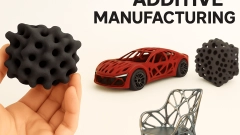
Explore the fundamentals of additive manufacturing, covering key technologies, materials, and AI advancements to prepare you for industry applications.
Lesprogramma
- Introduction to Additive Manufacturing
- Core Technologies in Additive Manufacturing
- Materials for Additive Manufacturing
- Designing for Additive Manufacturing
- Process and Workflow in Additive Manufacturing
- AI Advancements in Additive Manufacturing
- Challenges and Limitations
- Industry Applications and Case Studies
- Future Trends in Additive Manufacturing
- Conclusion and Future Learning Paths
Definition and history
Overview of key industries and applications
Stereolithography (SLA)
Fused Deposition Modeling (FDM)
Selective Laser Sintering (SLS)
Direct Metal Laser Sintering (DMLS)
Binder Jetting and Material Jetting
Polymers
Metals
Ceramics
Composites
Biodegradable and bio-compatible materials
Design principles and constraints
CAD software tools
Topology optimization
Pre-processing (design, slicing)
Printing process
Post-processing (finishing, testing)
Machine learning applications in design and optimization
Quality assurance and defect detection
Predictive maintenance and production scheduling
Technical challenges (accuracy, speed, scalability)
Economic considerations
Environmental impact and sustainability
Automotive and aerospace
Healthcare and medical devices
Consumer products
Construction
Emerging technologies
Expansion of material capabilities
Integration with Industry 4.0
Recap of key learning points
Additional resources for continued learning
Vakgebieden
Engineering