Qué necesitas saber antes de
comenzar
Inicio 14 July 2026 12:41
Fin 14 July 2026
2 hours 17 minutes
Actualización opcional disponible
Not Specified
Avanza a tu propio ritmo
Paid Course
Actualización opcional disponible
Resumen
Tips and Practical Examples for Planning, Structuring, Designing, and Delivering Impactful Research Presentations What you'll learn:
Learn a strategic approach to preparing a scientific presentationAssess the goals and interests of an audienceConvey a concise Central Message with your scientific talkStructure your presentation by adopting principles from storiesDesign slides for clear and effective communicationDeliver engaging presentationsBecome a more thoughtful and enthusiastic scientist Welcome to the Scientific Presentation Mastery Course!Science demands dedication. It can take several years to collect all the data for a complete study.
While publications are considered the currency of scientific success, presentations are often treated as a distraction from scientific work. However, presentations are the opportunity to personally showcase your work and interact with others directly.
It can be incredibly rewarding to discuss your work with other scientists, students, or even people outside of science because you realize how interesting and meaningful your work behind beakers, pipettes, and screens actually is.What makes this course special:
This course will teach you how to prepare presentations that stick in the minds of the audience. It will convey learnable techniques to excavate the essence of your work and communicate it clearly and memorably.
I strongly believe that preparing good presentations will make you a better scientist because it compels you to think deeply about your own scientific project. This course goes beyond tips for presenting a finished study.
It regards the process of preparing a presentation as a means to help you in excelling as a scientist.Meet your instructor:
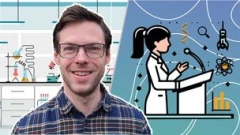
My name is George. I studied Biology and Psychology and obtained a PhD in Neuroscience in Germany.
Subsequently, I worked for three years as a scientific coordinator in artificial intelligence. I gave numerous talks and poster presentations.
I helped many fellow scientists to improve their presentations. My years of research and presentation experience I distilled into this course.What you will learn in this course:
The course is structured around six steps to outline the presentation process:
- Research:
The basis for every good presentation is well-conducted research.
I will start with a short overview of the research process and discuss how giving presentations can positively influence your scientific thinking.- Audience:
I will teach you how to tailor your talk to the goals and interests of your audience while keeping your own goals in mind.- Message:
Learning from the events around a failed space mission, you will realize the importance of a Central Message. This is the message you want the audience to take away.
I will teach you how to craft and design your talk around it.- Structure:
I will teach you how to structure your talk so that your results follow a logical flow. We will analyze how captivating stories like Jurassic Park are organized and how their structure can help us design comprehensible and memorable presentations.- Design:
You will learn how to design slides with instructive figures that can convey complex ideas with clarity.- Delivery:
I will advise you on the delivery of the presentation, including tips to start a presentation so that people want to listen, and tips to end a presentation so that people remember you.
Finally, I will share with you the secret superpower for any engaging presentation.How this course will benefit you:
This course will change your view on scientific presentations. You will not only be able to plan, a presentation much more thoughtfully but also conduct your research with a renewed sense of purpose.
Once you improve your presentation skills, you will soon realize the positive effects. Giving presentations is the most rewarding part of research and a wonderful opportunity to nurture and share your enthusiasm for your work.
But above all, investing time into presentations is an investment in becoming a better scientist. Let’s get started!
Programa
- Introducción a las Presentaciones Científicas
- Investigación y Preparación
- Comprendiendo a la Audiencia
- Creación de un Mensaje Central
- Estructuración de la Presentación
- Diseño de Diapositivas para una Comunicación Efectiva
- Técnicas de Entrega
- Revisión y Ejemplos Prácticos
- Convertirse en un Científico Reflexivo y Entusiasta
- Conclusión del Curso
Impartido por
Georg Hafner
Materias
Personal Development