Qué necesitas saber antes de
comenzar
Inicio 20 July 2026 12:12
Fin 20 July 2026
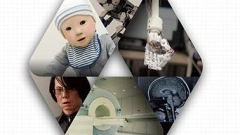
Robótica de la Neurociencia Cognitiva – Parte A
Osaka University
1 Cursos
La Universidad de Osaka es una de las universidades líderes de Japón, que ofrece una amplia gama de cursos en ciencias, humanidades y ciencias sociales. La universidad tiene una excelente reputación por sus logros en investigación y enseñanza, y es muy respetada internacionalmente.
14 hours
Actualización opcional disponible
Principiante
Avanza a tu propio ritmo
Free Online Course
Actualización opcional disponible
Resumen
Cognitive Neuroscience Robotics is an interdisciplinary area for development of new information and robot technology systems based on understanding higher functions of the human brain, with the integration of cognitive science, neuroscience, and robotics. This course introduces Cognitive Neuroscience Robotics with two approaches:
the synthetic and the analytic approach.
The synthetic approach means an engineering approach to understand human cognitive functions synthetically, trying to understand human cognitive functions by replicating them as artificial systems and putting them into social environments. Specifically, it develops artificial systems such as robots based on findings in neuroscience and physiology, and investigates how they could acquire intelligent behaviors through interaction with others and the environment.
On the other hand, human cognitive activities are investigated analytically. They are supported by higher functions of the brain and have been examined by psychological experiments or brain imaging.
With the analytic approach, psychologists, cognitive scientists, and medical doctors are pursuing an understanding of the mechanism of the mind and its biological basis, with the help of engineering and philosophy. This program will help students make a basis for interdisciplinary research by providing opportunities to understand what is undertaken in other disciplines and how to collaborate and exchange ideas with people from other disciplines.
We expect many motivated students to apply.
Programa
- Introducción a la Robótica de Neurociencia Cognitiva
- Conceptos Básicos de Neurociencia
- Fundamentos de la Ciencia Cognitiva
- Enfoque Sintético en la Robótica de Neurociencia Cognitiva
- Enfoque Analítico de las Actividades Cognitivas Humanas
- Integración de la Robótica con la Neurociencia
- Investigación Interdisciplinaria Colaborativa
- Consideraciones Éticas y Filosóficas
- Aplicaciones Prácticas y Direcciones Futuras
- Conclusión y Resumen del Curso
Impartido por
Minoru Asada, Hiroshi Ishiguro, Koh Hosoda and Yukie Nagai
Materias
Science