Ce que vous devez savoir avant
Vous commencez
Débute 20 July 2026 05:20
Se termine 20 July 2026
Robotique en neurosciences cognitives – Partie A
Osaka University
1 Cours
L'Université d'Osaka est l'une des principales universités du Japon, proposant une vaste gamme de cours dans les domaines des sciences, des sciences humaines et des sciences sociales. L'université jouit d'une excellente réputation pour ses réalisations en matière de recherche et d'enseignement, et est hautement respectée à l'international.
14 hours
Amélioration optionnelle disponible
Débutant
Progressez à votre rythme
Free Online Course
Amélioration optionnelle disponible
Aperçu
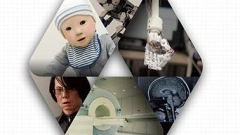
Cognitive Neuroscience Robotics is an interdisciplinary area for development of new information and robot technology systems based on understanding higher functions of the human brain, with the integration of cognitive science, neuroscience, and robotics. This course introduces Cognitive Neuroscience Robotics with two approaches:
the synthetic and the analytic approach.
The synthetic approach means an engineering approach to understand human cognitive functions synthetically, trying to understand human cognitive functions by replicating them as artificial systems and putting them into social environments. Specifically, it develops artificial systems such as robots based on findings in neuroscience and physiology, and investigates how they could acquire intelligent behaviors through interaction with others and the environment.
On the other hand, human cognitive activities are investigated analytically. They are supported by higher functions of the brain and have been examined by psychological experiments or brain imaging.
With the analytic approach, psychologists, cognitive scientists, and medical doctors are pursuing an understanding of the mechanism of the mind and its biological basis, with the help of engineering and philosophy. This program will help students make a basis for interdisciplinary research by providing opportunities to understand what is undertaken in other disciplines and how to collaborate and exchange ideas with people from other disciplines.
We expect many motivated students to apply.
Programme
- Introduction à la Robotique en Neurosciences Cognitives
- Concepts de Base en Neurosciences
- Fondements de la Science Cognitive
- Approche Synthétique de la Robotique en Neurosciences Cognitives
- Approche Analytique des Activités Cognitives Humaines
- Intégration de la Robotique avec les Neurosciences
- Recherche Collaborative Interdisciplinaire
- Considérations Éthiques et Philosophiques
- Applications Pratiques et Orientations Futures
- Conclusion et Récapitulatif du Cours
Enseigné par
Minoru Asada, Hiroshi Ishiguro, Koh Hosoda and Yukie Nagai
Matières
Science